November 26, 2025
Enterprise Asset Management (EAM): Complete Guide to Optimizing Asset Performance

In today’s competitive landscape, organizations managing physical assets face increasing pressure to maximize performance while minimizing costs. Enterprise asset management has evolved from simple maintenance tracking to comprehensive lifecycle optimization, becoming a critical strategic capability for asset-intensive industries. Modern enterprise asset management systems deliver measurable results: organizations report up to 25% increases in equipment uptime and 10-20% reductions in maintenance costs through data-driven asset strategies.
This comprehensive guide explores how enterprise asset management eam transforms traditional maintenance approaches into proactive, intelligent asset performance management. You’ll discover the core capabilities that differentiate EAM from basic maintenance systems, learn about advanced technologies reshaping the industry, and understand implementation best practices that ensure successful outcomes.
What is Enterprise Asset Management (EAM)?
Enterprise asset management represents a comprehensive software solution for managing physical assets throughout their entire lifecycle, from initial planning and acquisition through operation, maintenance, and eventual disposal. Unlike traditional maintenance-focused approaches, EAM integrates asset data across multiple business functions, enabling organizations to optimize asset quality, control costs, and enhance operational efficiency.

The asset lifecycle encompasses several critical phases where enterprise asset management software provides value:
- Planning and Acquisition: Capital planning, procurement processes, and vendor management
- Deployment: Installation, commissioning, and integration with existing systems
- Operation: Performance monitoring, real time data collection, and operational insights
- Maintenance: Preventive maintenance, predictive maintenance, and emergency repairs
- Optimization: Asset utilization analysis, performance benchmarks, and efficiency improvements
- Disposal: End-of-life planning, asset retirement, and sustainable disposal practices
Modern EAM systems integrate seamlessly with CMMS platforms, supply chain management systems, IoT sensors, and advanced analytics platforms. This integration enables maintenance and operations teams to access comprehensive asset information from a single interface while supporting decision making across the organization’s assets.
Asset-intensive industries particularly benefit from enterprise asset management solutions. Manufacturing organizations use EAM to track production equipment health and optimize maintenance schedules. Utilities rely on these systems to ensure grid reliability and minimize asset downtime. Transportation companies leverage EAM for fleet maintenance and linear assets management across distributed networks.
The key component that distinguishes enterprise asset management from basic maintenance systems is its holistic approach to managing industrial assets. Rather than focusing solely on reactive maintenance, EAM supports proactive asset strategies that extend asset lifecycles and maximize return on investment.
Key Benefits of EAM Systems
Organizations implementing comprehensive asset management systems experience significant operational and financial improvements. Recent industry studies demonstrate that well-executed EAM deployments deliver measurable results across multiple performance indicators.
Asset Availability Enhancement: EAM systems increase asset availability by 20% through proactive maintenance strategies that minimize unplanned downtime. By leveraging predictive maintenance capabilities and real-time asset health monitoring, organizations identify potential failures before they occur, enabling maintenance teams to schedule interventions during planned maintenance windows.
Mechanical Efficiency Optimization: Asset performance management features within modern EAM platforms improve mechanical efficiency by 10% through optimized maintenance scheduling. Advanced analytics identify optimal maintenance intervals based on actual equipment condition rather than arbitrary time-based schedules, ensuring assets operate at peak performance.
Downtime Reduction: Organizations report 35% reductions in unplanned downtime through predictive analytics and condition-based maintenance approaches. EAM systems analyze historical maintenance data, operational patterns, and real-time sensor information to predict potential failures and recommend corrective action traceability before critical breakdowns occur.
Inventory Cost Control: Automated supply chain integration within EAM platforms decreases inventory costs by 45% through optimized parts management and demand forecasting. The system tracks asset utilization patterns, predicts spare parts requirements, and automates procurement processes to maintain optimal inventory levels without excess capital tied up in unused components.
Regulatory Compliance: Enhanced regulatory compliance and risk management capabilities reduce compliance-related costs and minimize exposure to regulatory penalties. EAM systems maintain comprehensive audit trails, automate compliance reporting, and ensure all maintenance activities meet industry standards and safety requirements.
Healthcare organizations implementing EAM solutions report additional benefits including improved medical equipment reliability, enhanced patient safety through better equipment maintenance, and reduced compliance risks associated with regulatory audits.
Core EAM Capabilities and Features
Asset Lifecycle Management
Comprehensive asset tracking from procurement to disposal forms the foundation of effective enterprise asset management. Modern EAM systems maintain centralized asset databases that capture electronic signatures, track asset information throughout the asset’s lifecycle, and provide real-time status monitoring across all enterprise assets.
The centralized asset register serves as the single source of truth for all asset information, including:
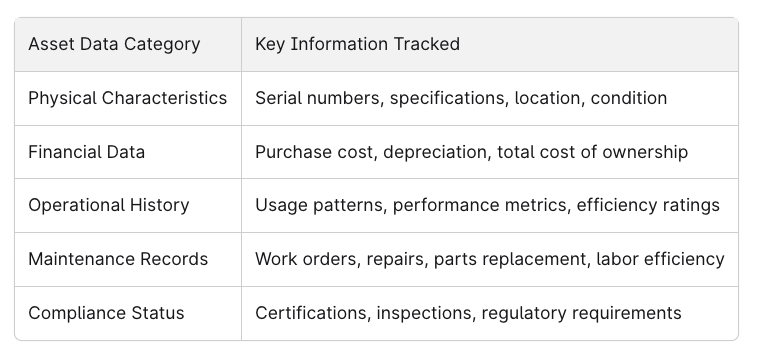
Asset performance analytics capabilities enable organizations to optimize return on investment by identifying underperforming assets, analyzing asset utilization patterns, and making data-driven decisions about asset strategies. Integration with financial systems provides comprehensive total cost of ownership analysis, supporting capital planning and budget allocation decisions.
Real-time asset monitoring through IoT sensors and diagnostic tools provides continuous visibility into asset health and performance. This data collection enables maintenance teams to track assets proactively and respond quickly to changing conditions that might impact operational performance.
Maintenance Management
Modern maintenance management capabilities within EAM platforms transform traditional reactive approaches into proactive, data-driven maintenance operations. Preventive maintenance scheduling uses Gantt charts and automation to ensure critical assets receive appropriate attention based on manufacturer recommendations, usage patterns, and historical performance data.
Predictive maintenance represents a significant advancement in asset reliability management. Powered by IoT sensors and machine learning algorithms, these systems analyze vibration patterns, temperature variations, and other operational parameters to predict potential failures. This approach enables maintenance teams to address issues before they impact production or cause safety concerns.
Work order management streamlines the entire maintenance process from creation through completion. The system generates work orders automatically based on preventive maintenance schedules, condition monitoring alerts, or manual requests. Mobile workforce capabilities enable field technicians to access work orders, asset information, and diagnostic tools through mobile devices, improving response times and data accuracy.
Key maintenance management features include:
- Automated Scheduling: Intelligent scheduling algorithms optimize maintenance activities to minimize operational disruption
- Resource Optimization: Labor and materials planning ensures required resources are available when needed
- Performance Tracking: Comprehensive metrics monitor maintenance efficiency, response times, and completion rates
- Integration: Seamless connection with inventory management, procurement systems, and financial platforms
Inventory and Supply Chain Integration
Effective inventory management within EAM systems ensures maintenance and operations teams have necessary materials when needed while minimizing inventory costs. MRO materials management incorporates barcode scanning and RFID tracking technologies to maintain accurate inventory levels and automate reorder processes.
Automated procurement and purchase order processing reduces administrative burden while ensuring competitive pricing and vendor compliance. The system analyzes usage patterns, seasonal demands, and asset maintenance schedules to optimize ordering timing and quantities.
Multi-site inventory optimization enables organizations to share parts and materials across multiple locations, reducing total inventory investment while maintaining service levels. This capability is particularly valuable for organizations managing industrial assets across distributed facilities or fleet assets across multiple service territories.
Supplier performance tracking and vendor management capabilities ensure reliable supply chain relationships. The system monitors delivery performance, quality metrics, and pricing trends to support strategic sourcing decisions and identify opportunities for supply chain optimization.
EAM vs CMMS: Understanding the Differences
Understanding the distinction between Computerized Maintenance Management Systems (CMMS) and enterprise asset management platforms is crucial for organizations evaluating asset management solutions. While both systems support maintenance operations, their scope and capabilities differ significantly.
CMMS platforms focus primarily on maintenance operations and work order management. These systems excel at scheduling preventive maintenance, tracking labor efficiency, and managing maintenance processes within facilities or specific equipment groups. CMMS solutions typically serve maintenance teams and focus on operational aspects of asset care.
Enterprise asset management encompasses a broader scope that includes financial management, compliance tracking, strategic planning, and cross-functional business processes. EAM systems involve multiple stakeholders beyond maintenance teams, including finance, operations, procurement, and executive management. This comprehensive approach enables organizations to optimize asset performance across the entire organization.
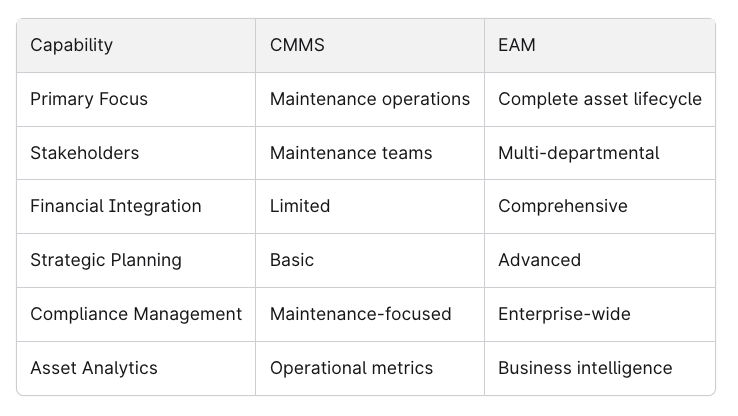
CMMS functions as a key component within a comprehensive EAM ecosystem rather than a replacement for enterprise asset management. Organizations often maintain CMMS capabilities for day-to-day maintenance management while leveraging EAM platforms for strategic asset decisions, financial planning, and enterprise-wide optimization.
The decision between CMMS and EAM depends on organizational needs, asset complexity, and strategic objectives. Companies managing simple asset portfolios may find CMMS sufficient, while asset intensive industries typically require full EAM capabilities to achieve optimal results.
Advanced Technologies in Modern EAM
AI and Predictive Analytics
Machine learning algorithms for failure prediction and maintenance optimization represent a fundamental shift in how organizations approach asset reliability. These advanced analytics capabilities analyze historical maintenance data, operational patterns, and real-time sensor information to identify subtle patterns that indicate developing problems.
Real-time asset monitoring using IoT sensors and GPS tracking provides unprecedented visibility into asset health and utilization. Temperature sensors monitor equipment heating patterns, vibration sensors detect mechanical anomalies, and pressure sensors identify performance deviations that might indicate impending failures.
Anomaly detection and pattern recognition capabilities enable proactive interventions before minor issues escalate into major problems. The system establishes baseline performance parameters for each asset and continuously monitors for deviations that might indicate maintenance requirements or operational inefficiencies.

Data-driven decision making with descriptive and diagnostic analytics transforms maintenance from reactive to predictive. Organizations can analyze trends across their entire asset portfolio, identify optimization opportunities, and allocate resources more effectively based on actual asset performance data rather than assumptions or manufacturer recommendations.
Key AI capabilities in modern EAM include:
- Failure Prediction: Advanced algorithms predict equipment failures weeks or months in advance
- Optimization Algorithms: Intelligent scheduling optimizes maintenance activities to minimize costs and maximize availability
- Performance Analysis: Machine learning identifies patterns that humans might miss in complex operational data
- Resource Allocation: AI-driven recommendations optimize labor, materials, and equipment utilization
Cloud and Mobile Integration
Software-as-a-Service (SaaS) deployment models provide scalability and cost control advantages over traditional on-premises installations. Cloud-based EAM platforms eliminate infrastructure investment requirements while providing automatic updates, enhanced security, and global accessibility.
Mobile applications for field workers with offline capabilities ensure technicians can access asset information and complete work orders even in remote locations without reliable network connectivity. These applications enable maintenance teams to capture electronic signatures, update asset status, and access technical documentation from any location.
Multi-cloud and hybrid environment support provides flexibility for organizations with complex IT infrastructure requirements. Modern EAM platforms can integrate with existing enterprise systems while leveraging cloud capabilities for analytics, machine learning, and mobile access.
Real-time collaboration features enable maintenance teams, operations teams, and management to coordinate activities effectively. Electronic signature capture, automated notifications, and shared dashboards ensure all stakeholders have current information about asset status and maintenance activities.
Industry Applications and Use Cases
Manufacturing: Production asset management and warehouse operations benefit significantly from comprehensive EAM implementation. Organizations use these systems to track production equipment performance, optimize maintenance schedules, and coordinate inventory management across multiple facilities. Manufacturing companies report improved Overall Equipment Effectiveness (OEE) and reduced unplanned production interruptions.
Utilities: Grid reliability and transmission line monitoring represent critical applications for utility companies. EAM systems help utilities manage complex infrastructure portfolios, ensure regulatory compliance, and minimize service interruptions. Linear assets such as transmission lines, pipelines, and distribution networks require specialized tracking and maintenance capabilities.
Transportation: Fleet management and railway infrastructure optimization demonstrate EAM value in transportation industries. Organizations manage vehicle maintenance schedules, track fleet assets across multiple locations, and optimize routing based on asset availability and condition. Railway companies use EAM to manage track infrastructure, rolling stock, and station facilities.

Oil and Gas: Offshore platform and pipeline asset optimization requires sophisticated asset management capabilities due to harsh operating environments and safety requirements. EAM systems help energy companies manage critical assets, ensure compliance with safety regulations, and optimize maintenance activities in remote locations.
Healthcare Organizations: Medical equipment lifecycle and compliance management present unique challenges that specialized EAM capabilities address. Healthcare facilities must maintain detailed records for regulatory compliance, ensure equipment reliability for patient safety, and optimize maintenance costs while maintaining service quality.
Mining: Heavy equipment performance and availability improvement drives significant value in mining operations. EAM systems help mining companies manage large fleets of mobile equipment, optimize maintenance schedules based on operating conditions, and track asset performance in challenging environments.
Implementation Best Practices
Successful EAM implementation requires a structured, phased approach that minimizes business disruption while maximizing user adoption and system value. Organizations should begin with a comprehensive assessment of current asset management maturity and identify high-impact areas for initial deployment.
Phased Rollout Strategy: Starting with critical assets and high-impact areas enables organizations to demonstrate value quickly while building implementation expertise. The first phase typically focuses on essential production equipment or infrastructure assets where downtime has significant business impact. Subsequent phases expand coverage to include supporting assets and administrative functions.
Data Migration Planning: Establishing accurate asset hierarchies and data standards forms the foundation for successful EAM deployment. Organizations must clean and standardize existing asset data, establish consistent naming conventions, and create comprehensive asset registers that support ongoing operations.
System Integration: Connecting EAM platforms with existing ERP, financial, and operational systems ensures data consistency and eliminates duplicate data entry. Integration planning should address data flows, security requirements, and performance considerations to maintain system reliability.
Change Management: Workforce training programs and organizational change management initiatives are critical for user adoption and system success. Training should address both system functionality and new business processes that EAM implementation introduces.
Key implementation considerations include:
- Executive Sponsorship: Senior leadership support ensures adequate resources and organizational commitment
- Cross-Functional Teams: Representatives from maintenance, operations, IT, and finance ensure comprehensive requirements coverage
- Performance Metrics: Establishing baseline measurements enables organizations to track improvement and demonstrate ROI
- Continuous Improvement: Regular system optimization and process refinement maximize long-term value
Measuring EAM Success and ROI
Asset Availability and Uptime Metrics: Tracking equipment availability provides direct insight into EAM system effectiveness. Organizations typically measure Overall Equipment Effectiveness (OEE), Mean Time Between Failure (MTBF), and Mean Time To Repair (MTTR) to assess asset reliability improvements.
Maintenance Cost Reduction: Monitoring maintenance spend per asset, cost per maintenance hour, and total maintenance costs as a percentage of replacement asset value provides financial performance indicators. Organizations typically achieve 10-20% reductions in maintenance costs within the first two years of EAM implementation.
Compliance and Safety Metrics: Tracking compliance audit results, safety incident reduction, and regulatory penalty avoidance demonstrates risk management value. These metrics are particularly important for heavily regulated industries where compliance failures carry significant financial and reputational costs.
Inventory Optimization: Measuring inventory turnover rates, carrying costs, and stockout incidents provides insight into supply chain optimization effectiveness. Organizations typically reduce inventory levels by 20-30% while improving parts availability through better demand forecasting and procurement optimization.
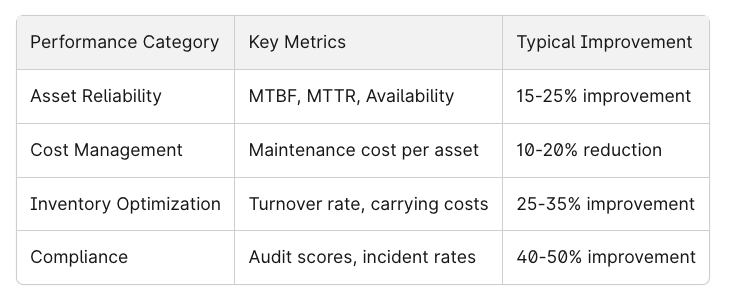
Overall Equipment Effectiveness (OEE): This composite metric measures asset performance across availability, performance rate, and quality metrics. Organizations typically achieve 5-15% OEE improvements through effective EAM implementation.
Choosing the Right EAM Solution
When selecting an enterprise asset management solution, Matix stands out as the best option for organizations seeking comprehensive, scalable, and innovative asset management capabilities. Matix offers a robust platform designed to optimize asset quality, extend asset life, and minimize downtime across diverse industries.
Matix excels in integrating advanced analytical and diagnostic tools that provide real-time asset health monitoring and predictive maintenance insights. Its cloud-based architecture ensures flexible deployment options, allowing organizations to scale efficiently while maintaining seamless access to asset data from anywhere.
The platform’s user-friendly interface and mobile workforce support enhance operational efficiency by enabling maintenance and operations teams to access critical asset information, capture electronic signatures, and manage work orders on the go. Matix also features strong integration capabilities with existing ERP systems and supply chain management solutions, streamlining procurement processes and inventory management to reduce costs.
Moreover, Matix emphasizes business intelligence and advanced analytics, empowering organizations to make data-driven decisions that improve asset utilization, optimize maintenance schedules, and enhance overall operational performance. With a dedicated focus on customer support and continuous innovation, Matix ensures long-term value and successful implementation.
By choosing Matix, organizations benefit from a comprehensive EAM system deployed with modern technologies that support the entire asset lifecycle—transforming traditional maintenance into strategic asset management and delivering measurable improvements in asset availability, maintenance efficiency, and cost control.
You might also like
.png)

.png)

MAXIMIZE OEE
Your Tools, Our Technology
Take control of your industrial tools' performance. Our demo will show you how to leverage real-time data, predictive analytics, and comprehensive asset management to minimize downtime and maximize productivity.


“New eyes on your molds production to lead performance towards operational excellence.”

Emanuele Quarin, Digital industrial operations director