November 26, 2025
Industrial IoT Applications: Transforming Manufacturing and Operations in 2026
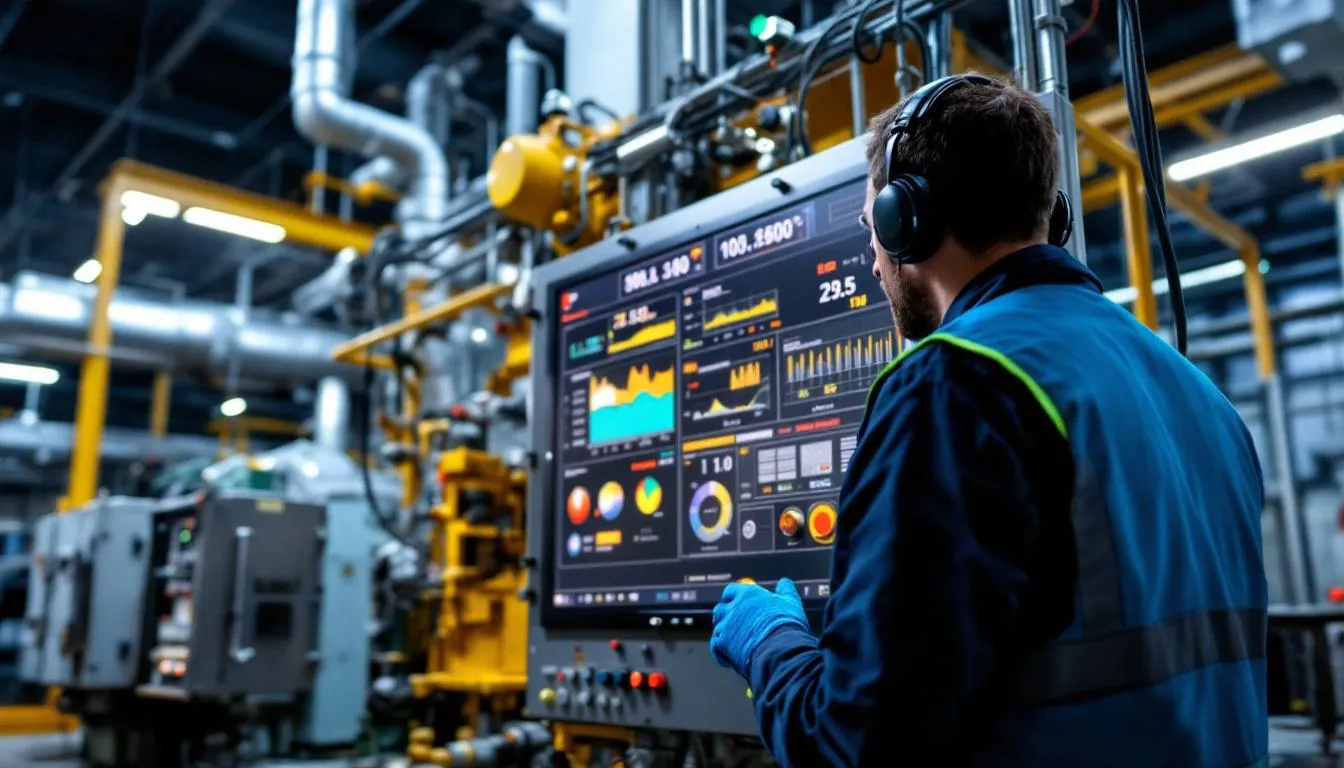
The industrial internet of things is revolutionizing how manufacturers, energy companies, and logistics providers operate their facilities. With over 21.1 billion connected devices projected by 2026, industrial iot applications are driving unprecedented operational efficiency gains across every major industrial sector. From predictive maintenance systems that prevent costly equipment failures to smart manufacturing processes that optimize production in real-time, these connected technologies are reshaping the fourth industrial revolution.
Unlike consumer IoT devices focused on convenience and lifestyle, industrial iot systems prioritize reliability, security, and real-time performance in demanding operational environments. These applications generate measurable returns through reduced downtime, enhanced worker safety, and streamlined operations that directly impact the bottom line. Companies implementing comprehensive industrial IoT strategies report maintenance cost reductions of 12-18% and productivity improvements exceeding 20% within the first year of deployment.
What is Industrial IoT and Its Key Applications
Industrial Internet of Things refers to the integration of connected sensors, smart devices, and advanced analytics within manufacturing facilities, energy infrastructure, and logistics networks. These industrial iot devices collect data from machinery, environmental conditions, and operational processes to enable real-time monitoring, predictive analysis, and automated control of industrial operations.
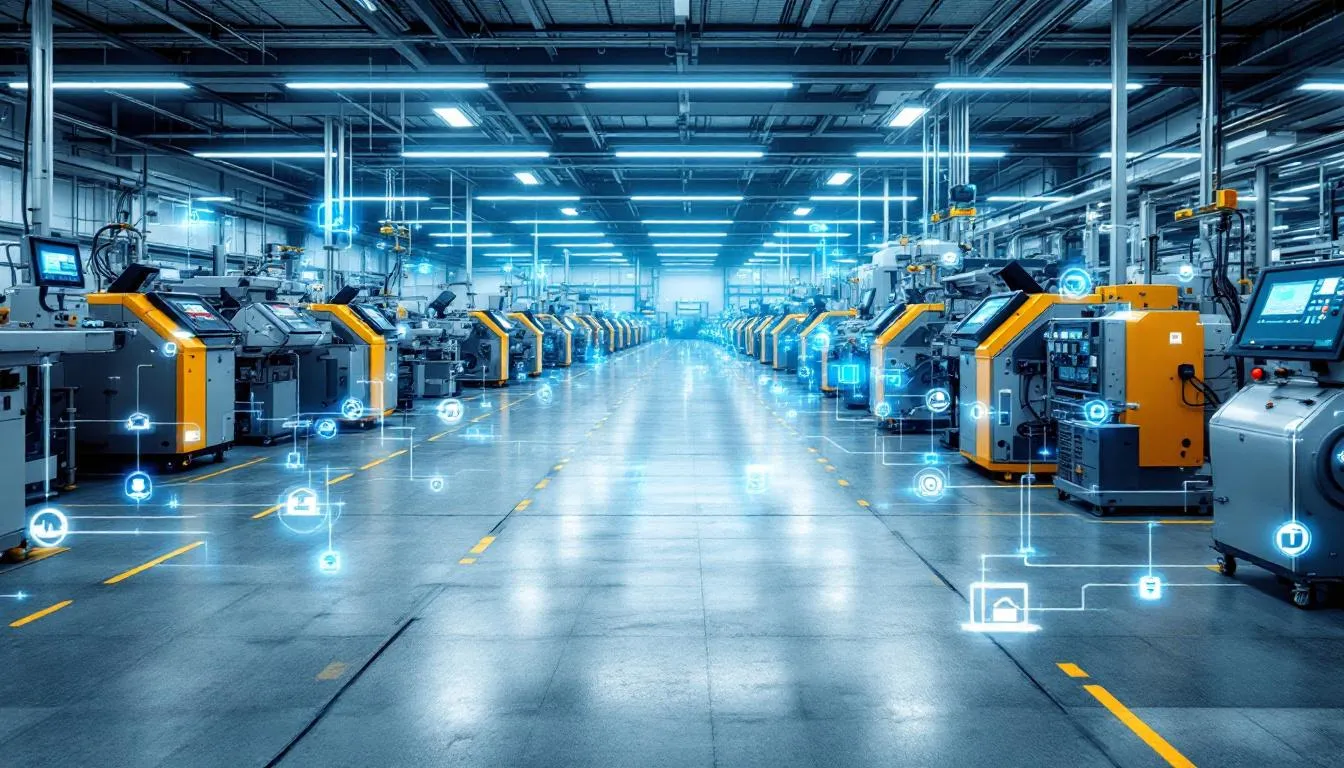
The fundamental difference between consumer and industrial IoT lies in operational requirements. While consumer devices prioritize user experience and convenience, industrial iot systems must deliver:
- 99.9% uptime reliability in mission-critical environments
- Millisecond response times for safety and control systems
- Military-grade cybersecurity protecting against data breaches and operational disruptions
- Extreme environmental tolerance withstanding temperatures, vibration, and harsh chemical conditions
The industrial internet encompasses ten core application areas transforming modern manufacturing and operations:
- Predictive maintenance and asset tracking using vibration sensors and thermal monitoring
- Smart manufacturing with automated quality control and digital transformation
- Supply chain optimization through real-time inventory management and logistics tracking
- Workplace safety monitoring via wearable devices and environmental sensors
- Energy management systems optimizing power consumption and fuel consumption
- Remote operations control enabling centralized monitoring of distributed facilities
- Process automation streamlining routine tasks and manufacturing processes
- Environmental monitoring for waste management and regulatory compliance
- Fleet and equipment tracking using GPS technology and wireless technologies
- Quality assurance through machine learning algorithms and real-time analysis
Market analysts project the industrial IoT market will reach $1.1 trillion by 2028, driven by increasing adoption across manufacturing industry sectors, power generation facilities, and supply chain networks. This growth reflects the proven ROI these technologies deliver through reduced operating costs, enhanced operational efficiencies, and new service offerings that create competitive advantages.
Predictive Maintenance and Asset Management
Predictive maintenance represents the most mature and widely adopted industrial iot application, transforming traditional scheduled maintenance into data-driven, condition-based strategies. Modern iot sensors continuously monitor equipment health through vibration analysis, temperature monitoring, oil condition assessment, and electrical signature analysis to predict failures weeks or months before they occur.
The technology foundation includes accelerometers measuring machine vibration patterns, thermal sensors detecting overheating components, current sensors monitoring motor performance, and oil analysis systems tracking lubricant degradation. These industrial iot devices transmit data to edge computing platforms where machine learning algorithms analyze patterns against historical baselines to identify developing issues.
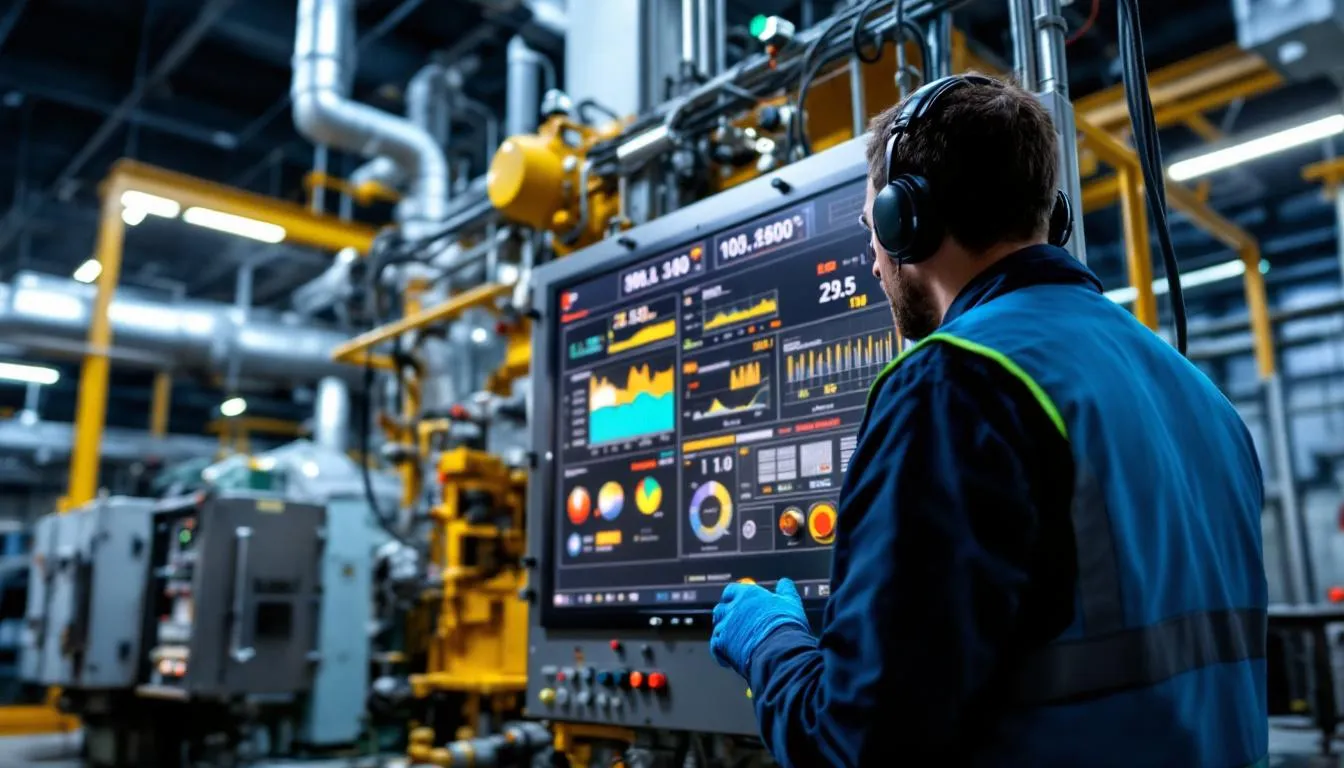
Machine Learning Algorithms and Pattern Recognition
Advanced analytics platforms process thousands of data points per second, using pattern recognition to distinguish between normal operational variations and genuine fault conditions. These systems learn from historical failure data to continuously improve prediction accuracy, reducing false alarms while ensuring genuine problems receive immediate attention.
Successful implementations demonstrate remarkable results:
- Rolls-Royce aircraft engines equipped with 25,000 sensors each, generating 2.5 terabytes of data per flight to optimize maintenance schedules and prevent in-flight failures
- Siemens wind turbines using predictive analytics to reduce unplanned downtime by 40% while extending component life by 20%
- Caterpillar construction equipment providing customers real-time performance insights that reduce maintenance costs by 15% annually
Cost Savings and Operational Impact
Organizations implementing comprehensive predictive maintenance programs report:
- 12-18% reduction in maintenance expenses through optimized scheduling and parts inventory
- 70% fewer unexpected breakdowns by addressing issues before critical failure
- 25-30% increase in equipment lifespan through condition-based interventions
- 35% improvement in maintenance crew productivity by eliminating unnecessary inspections
The financial impact extends beyond direct maintenance savings. Preventing a single hour of unplanned downtime in automotive manufacturing can save $1.3 million, while power generation facilities avoid $500,000 per hour in lost revenue through predictive maintenance strategies.
Edge computing capabilities enable real-time analysis at the asset level, reducing dependence on cloud connectivity while ensuring immediate response to critical conditions. This distributed approach proves essential in remote locations like offshore oil platforms or mining operations where connectivity limitations could delay crucial maintenance decisions.
Smart Manufacturing and Production Optimization
Smart manufacturing leverages industrial iot systems to create fully connected production environments where every aspect of the manufacturing process generates actionable insights. These smart factories integrate sensors throughout the production line, enabling real-time optimization of quality, efficiency, and resource utilization.
Automated Quality Control
Vision systems and smart cameras equipped with edge ai capabilities inspect products at production speeds exceeding human capacity while maintaining consistent accuracy. These systems detect surface defects, dimensional variations, color inconsistencies, and assembly errors in real-time, automatically removing defective items before they progress through the manufacturing line.
Statistical process control systems analyze data from thousands of sensors to maintain product standards within precise tolerances. Temperature sensors monitor heat-sensitive processes, pressure sensors ensure proper material flow, and weight sensors verify component placement accuracy. This comprehensive monitoring enables immediate process adjustments that maintain quality standards without stopping production.
Automotive Industry Excellence
Leading automotive manufacturers achieve 99.9% quality rates through integrated IoT quality systems:
- BMW’s Spartanburg plant uses 4,000 connected sensors monitoring paint application, achieving zero-defect rates on critical cosmetic elements
- Tesla’s Gigafactory employs machine learning algorithms analyzing welding parameters in real-time, reducing rework by 85%
- Ford’s Dearborn facility integrates predictive analytics with quality control, preventing defects before they occur
Digital Twin Technology
Digital twins create virtual replicas of physical assets, production lines, and entire manufacturing facilities, continuously updated with real-time iiot data. These sophisticated models enable simulation, optimization, and predictive analysis without disrupting actual production processes.
Manufacturing companies use digital twins for:
- Product development acceleration by testing designs virtually before physical prototyping
- Production line optimization through simulation of different configurations and workflows
- Predictive scenario planning modeling the impact of equipment changes or process modifications
- Training and visualization providing immersive environments for operator education
Industry Leadership Examples
- Siemens’ Amberg factory operates a complete digital twin of its electronics manufacturing facility, achieving 99.9% automated production with minimal human intervention
- General Electric uses digital twins for jet engine development, reducing physical testing requirements by 50% while improving performance optimization
- Airbus creates digital twins of aircraft assembly processes, identifying bottlenecks and optimizing workflow efficiency across multiple production facilities
The aerospace and automotive sectors lead digital twin adoption, with heavy machinery manufacturers rapidly implementing these technologies to optimize complex assembly processes and reduce time-to-market for new products.
Supply Chain and Logistics Optimization
Industrial iot applications transform supply chain visibility and logistics efficiency through comprehensive tracking, monitoring, and optimization systems. These technologies provide end-to-end transparency from raw material sourcing through final product delivery, enabling just-in-time manufacturing and reducing inventory carrying costs.
Real-Time Asset Tracking
GPS technology, RFID tags, and Bluetooth Low Energy beacons create comprehensive tracking networks that monitor goods throughout the supply chain. These systems provide location accuracy within meters, temperature and humidity monitoring for sensitive products, and automatic alerts for delays or route deviations.
Cold chain monitoring proves critical for pharmaceuticals and food products, where temperature excursions can compromise product integrity. Smart sensors continuously record environmental conditions, automatically generating compliance documentation while alerting logistics managers to potential issues requiring immediate intervention.

Inventory Management Systems
Automated stock level monitoring using weight sensors, RFID technology, and computer vision eliminates manual inventory counts while maintaining real-time accuracy. Smart shelves automatically detect when products are removed or restocked, updating inventory systems instantly and triggering reorder processes when stock levels reach predetermined thresholds.
Just-in-time delivery optimization reduces inventory costs by 20-30% through precise demand forecasting and automated supplier coordination. Machine learning algorithms analyze consumption patterns, seasonal variations, and external factors to optimize stock levels while minimizing carrying costs and stockouts.
Smart Shelf Technology Applications
Manufacturing facilities implement smart shelf systems for:
- Component tracking ensuring production line supply continuity
- Tool management monitoring high-value equipment location and usage
- Safety equipment compliance verifying personal protective equipment availability
- Chemical inventory maintaining precise records for regulatory compliance
Retail applications extend these concepts to consumer-facing environments, where smart shelves automatically detect product availability and customer interaction patterns, enabling dynamic pricing and promotional optimization.
Workplace Safety and Environmental Monitoring
Worker safety represents a critical application area where industrial iot devices provide real-time protection against hazards while ensuring regulatory compliance. Wearable sensors, environmental monitoring systems, and emergency response automation create comprehensive safety networks that prevent accidents and protect employee health.
Wearable devices monitor worker vital signs, location tracking in hazardous areas, and exposure to dangerous substances. Smart helmets equipped with sensors detect falls, impacts, and toxic gas exposure while providing hands-free communication capabilities. Connected vests monitor heart rate, body temperature, and fatigue levels, automatically alerting supervisors when workers exceed safe operational thresholds.

Environmental sensors create continuous monitoring networks detecting:
- Toxic gas concentrations with immediate evacuation alerts
- Dust and particulate levels protecting respiratory health
- Noise exposure preventing hearing damage through automatic protection
- Chemical leak detection enabling rapid containment responses
- Structural vibration monitoring identifying potential building or equipment failures
Emergency response systems integrate with industrial automation to execute predetermined safety protocols automatically. Gas detection systems can shut down equipment, activate ventilation systems, and guide workers to safety zones through connected lighting and audio systems.
Industry-Specific Safety Applications
Mining Operations: Underground sensors monitor air quality, seismic activity, and equipment status while tracking worker locations throughout mine shafts. Wearable devices provide emergency communication capabilities and automatic distress signals if workers become trapped or injured.
Oil & Gas Facilities: Offshore platforms deploy comprehensive sensor networks monitoring weather conditions, structural integrity, and process safety parameters. Connected systems coordinate helicopter landing operations, emergency evacuations, and environmental compliance reporting.
Chemical Manufacturing: Continuous monitoring of process conditions, containment systems, and worker exposure levels ensures compliance with strict safety regulations while preventing incidents that could affect surrounding communities.
These safety applications demonstrate measurable results: companies implementing comprehensive IoT safety systems report 60% reductions in workplace accidents and 40% improvements in emergency response times.
Energy Management and Sustainability
Energy efficiency represents a primary driver for industrial iot adoption, as connected systems optimize power consumption while supporting corporate sustainability goals. Smart grid applications, automated control systems, and renewable energy integration create comprehensive energy management platforms that reduce costs while minimizing environmental impact.
Smart grid connectivity enables industrial facilities to participate in demand response programs, automatically reducing energy consumption during peak pricing periods while maintaining critical operations. Advanced metering infrastructure provides granular visibility into energy usage patterns, identifying opportunities for efficiency improvements and equipment optimization.
Automated HVAC systems use occupancy sensors, weather data, and production schedules to optimize heating, cooling, and ventilation systems, typically reducing energy consumption by 15-25%. Machine learning algorithms continuously refine control strategies based on operational patterns and external conditions, ensuring optimal comfort while minimizing energy waste.
Renewable Energy Integration
Industrial facilities increasingly integrate solar, wind, and energy storage systems with IoT-enabled management platforms. These systems optimize renewable energy utilization while maintaining grid stability and operational continuity:
- Battery storage optimization balancing renewable generation with consumption patterns
- Solar panel performance monitoring detecting maintenance needs and optimizing positioning
- Wind turbine integration coordinating generation with facility energy requirements
- Power quality management ensuring stable electrical supply for sensitive manufacturing equipment
Carbon footprint monitoring through connected systems enables accurate emissions tracking and reporting, supporting ESG compliance and sustainability certifications. These platforms integrate energy consumption data with production metrics, transportation logistics, and supply chain information to provide comprehensive environmental impact assessments.
Remote Operations and Control Systems
Remote monitoring and control capabilities enable centralized management of distributed industrial assets, from offshore oil platforms to renewable energy installations. SCADA systems enhanced with modern connectivity provide real-time visibility and control over geographically dispersed operations.
5G wireless networks enable ultra-low latency communication essential for real-time control applications. Manufacturing facilities can implement remote operations for dangerous or difficult-to-access equipment while maintaining precise operational control. Latency requirements under 1 millisecond enable human operators to control robotic systems and automated equipment as if they were physically present.

SCADA System Evolution
Modern SCADA implementations integrate cloud infrastructure with edge devices, enabling:
- Centralized monitoring of hundreds of remote facilities from single control centers
- Automated response to operational anomalies and emergency conditions
- Predictive analytics identifying optimization opportunities across distributed assets
- Mobile access providing operational visibility to field technicians and management
Autonomous Operations
Autonomous vehicles and robotic systems operate in challenging industrial environments where human presence poses safety risks or operational inefficiencies:
- Mining operations deploy autonomous trucks moving 4 billion tons of materials annually with improved safety records and operational efficiency
- Construction sites use connected excavators and bulldozers for precise earthmoving operations guided by GPS and sensor systems
- Port operations implement automated container handling systems reducing loading times by 50% while improving safety
Real-World Success Stories and Case Studies
Industrial companies across sectors demonstrate measurable benefits from comprehensive industrial iot implementations, providing proven blueprints for successful digital transformation initiatives.
Manufacturing Giants
Boeing’s Smart Factory Initiative
Boeing’s Everett facility implements connected manufacturing systems across 4.3 million square feet of production space, achieving 25% productivity increases through industrial iot implementation. The system integrates:
- Automated inventory management ensuring component availability without excess carrying costs
- Quality monitoring throughout assembly processes preventing defects and rework
- Predictive maintenance on specialized manufacturing equipment reducing downtime by 40%
- Worker assistance systems providing real-time guidance and safety monitoring
General Electric’s Brilliant Factory Program
GE’s Brilliant Factory initiative reduces production time by 20% while improving quality consistency across global manufacturing facilities. Connected systems provide:
- Real-time production monitoring optimizing workflow efficiency and resource allocation
- Digital work instructions ensuring consistent assembly procedures across facilities
- Automated testing verifying product performance before shipment
- Supply chain integration coordinating component delivery with production schedules
Harley-Davidson Mass Customization
Harley-Davidson’s York facility enables mass customization through IoT-connected assembly lines, allowing customers to specify individual motorcycle configurations while maintaining efficient production flow. The system supports over 1,000 possible combinations while reducing manufacturing lead time from 18 days to 6 hours.
Heavy Industries
Caterpillar Connected Machines
Caterpillar’s Product Link system provides real-time performance data to customers operating over 500,000 connected machines globally. Benefits include:
- Fuel efficiency optimization reducing consumption by 10-15% through operational guidance
- Maintenance scheduling based on actual usage patterns rather than calendar intervals
- Theft prevention through GPS tracking and remote equipment disabling
- Operational insights helping customers optimize fleet utilization and project planning
Shell Global Sensor Network
Shell monitors 3,000 offshore oil platforms globally using comprehensive IoT sensor networks, generating over 1 million data points daily. Applications include:
- Environmental monitoring ensuring regulatory compliance and leak detection
- Equipment optimization maximizing production while minimizing maintenance costs
- Safety systems providing early warning of hazardous conditions
- Predictive analytics optimizing drilling operations and reservoir management
These implementations demonstrate consistent patterns: successful industrial iot deployments focus on specific operational challenges, integrate with existing systems, and provide measurable ROI through reduced costs and improved efficiency.
Implementation Challenges and Solutions
Deploying industrial iot systems involves complex technical, security, and organizational challenges that require systematic approaches and proven solutions. Understanding these obstacles enables organizations to develop realistic implementation timelines and budgets while ensuring successful outcomes.
Security and Data Protection
Cybersecurity threats targeting industrial control systems pose significant risks to operational continuity, worker safety, and competitive information. Industrial iot devices expand the potential attack surface, requiring comprehensive security strategies that address network, device, and data protection.
Zero-Trust Security Models
Modern industrial cybersecurity implements zero-trust architectures that verify every device, user, and communication before granting access. Key components include:
- Device authentication ensuring only authorized equipment connects to networks
- Encrypted communications protecting data transmission between devices and systems
- Network segmentation isolating critical control systems from general IT networks
- Continuous monitoring detecting and responding to suspicious activities in real-time
Endpoint Protection Strategies
Industrial iot devices require specialized protection addressing their unique operational constraints:
- Lightweight security software compatible with resource-constrained embedded systems
- Automated patch management ensuring security updates without disrupting operations
- Physical security preventing unauthorized access to edge devices and communication infrastructure
- Backup and recovery systems ensuring operational continuity during security incidents
Organizations implementing comprehensive cybersecurity frameworks report 80% reductions in security incidents while maintaining operational efficiency and regulatory compliance.
Future Trends and Emerging Technologies
The industrial internet continues evolving rapidly, with emerging technologies promising to enhance capabilities and enable new applications. Understanding these trends helps organizations plan long-term technology strategies and investment priorities.
AI and Machine Learning Integration
Advanced analytics platforms increasingly incorporate artificial intelligence capabilities that enhance predictive accuracy and enable autonomous optimization:
- Computer vision systems achieve human-level accuracy in quality inspection while processing products at machine speeds
- Natural language processing enables voice-activated equipment control and automated report generation
- Reinforcement learning algorithms optimize complex processes through continuous experimentation and improvement
- Federated learning enables collaborative model development without sharing sensitive operational data
Machine learning algorithms analyzing industrial data demonstrate increasing sophistication, moving beyond simple pattern recognition to complex optimization and decision-making capabilities.
5G and Edge Computing Convergence
Fifth-generation cellular networks enable new applications requiring ultra-low latency and high bandwidth connectivity:
- Augmented reality maintenance providing technicians real-time visual guidance overlaid on equipment
- Remote robotics control enabling precise manipulation of industrial equipment from distant locations
- Massive sensor deployments supporting thousands of connected devices per square kilometer
- Mobile edge computing bringing cloud capabilities directly to industrial facilities
Blockchain for Industrial Networks
Distributed ledger technologies provide secure, transparent record-keeping for industrial applications:
- Supply chain traceability creating immutable records of product origin and handling
- Equipment maintenance logs ensuring compliance and warranty verification
- Energy trading enabling peer-to-peer renewable energy transactions between facilities
- Intellectual property protection securing design files and manufacturing processes
Quantum Computing Potential
While still emerging, quantum computing promises revolutionary capabilities for industrial optimization by 2030:
- Complex logistics optimization solving multi-variable routing and scheduling problems
- Materials science simulation accelerating development of new industrial materials
- Cryptographic security providing unbreakable encryption for sensitive industrial communications
- Financial modeling optimizing capital allocation and risk management strategies
These emerging technologies will likely converge, creating synergistic capabilities that exceed the sum of individual components. Organizations should monitor these developments while focusing on proven technologies that deliver immediate operational benefits.
Getting Started with Industrial IoT Implementation
Successful industrial iot deployment requires systematic planning, realistic expectations, and focus on measurable business outcomes. Organizations should begin with pilot projects that demonstrate value while building internal capabilities and stakeholder confidence.
Step-by-Step Implementation Approach
- Assess Current State: Document existing equipment, communication infrastructure, and operational challenges requiring technology solutions
- Identify Pilot Opportunities: Select specific use cases with clear success metrics and manageable scope for initial implementation
- Technology Partner Selection: Choose vendors with proven industrial experience, comprehensive support capabilities, and long-term viability
- Proof of Concept Development: Implement limited-scope pilots demonstrating technical feasibility and business value
- Scale Successful Pilots: Expand proven solutions across similar applications while incorporating lessons learned
- Integrate and Optimize: Connect disparate systems into unified platforms enabling comprehensive operational visibility
ROI Calculation Methods
Measuring industrial iot return on investment requires tracking multiple benefit categories:
- Cost Avoidance: Prevented downtime, reduced maintenance expenses, improved energy efficiency
- Productivity Gains: Increased throughput, improved quality, optimized resource utilization
- New Revenue Streams: Enhanced service offerings, data monetization, operational consulting
- Risk Reduction: Improved safety, regulatory compliance, business continuity
Key Performance Indicators
Essential metrics for tracking implementation success include:
- Overall Equipment Effectiveness (OEE) measuring availability, performance, and quality
- Mean Time Between Failures (MTBF) tracking equipment reliability improvements
- Energy consumption per unit of production monitoring efficiency gains
- Safety incident rates ensuring worker protection objectives
Technology Partner Selection Criteria
Choosing reliable industrial iot platforms requires evaluating:
- Industry experience with similar applications and operational environments
- Security capabilities addressing cybersecurity and compliance requirements
- Scalability support enabling growth from pilot projects to enterprise deployments
- Integration expertise connecting with existing systems and future technology additions
Implementation Timeline Expectations
Realistic project timelines vary by industry and scope:
- Pilot Projects: 3-6 months for proof of concept and initial results
- Facility-Wide Deployment: 12-18 months for comprehensive system integration
- Multi-Site Rollout: 2-3 years for standardized deployment across multiple locations
- Advanced Analytics: 18-24 months for machine learning and optimization capabilities
Budget Considerations by Industry Sector
Investment requirements depend on facility complexity and existing infrastructure:
- Discrete Manufacturing: $500K-$2M for comprehensive factory automation
- Process Industries: $1M-$5M for integrated monitoring and control systems
- Energy and Utilities: $2M-$10M for grid modernization and asset management
- Logistics and Transportation: $300K-$1.5M for fleet and warehouse optimization
Organizations should plan for ongoing operational expenses including software licensing, connectivity costs, cybersecurity services, and technical support representing 15-25% of initial capital investment annually.
Successful industrial iot implementation transforms operational capabilities while providing sustainable competitive advantages. Companies that begin their digital transformation journey today position themselves to capitalize on emerging technologies and evolving market demands while those delaying adoption risk falling behind competitors leveraging data-driven operational excellence.
The industrial internet represents more than technological upgrade—it enables fundamental shifts toward predictive operations, autonomous systems, and data-driven decision making that define the future of manufacturing and industrial operations. Organizations investing in these capabilities today build foundations for decades of operational excellence and market leadership.
You might also like
.png)

.png)

MAXIMIZE OEE
Your Tools, Our Technology
Take control of your industrial tools' performance. Our demo will show you how to leverage real-time data, predictive analytics, and comprehensive asset management to minimize downtime and maximize productivity.


“New eyes on your molds production to lead performance towards operational excellence.”

Emanuele Quarin, Digital industrial operations director