November 26, 2025
Industrial IoT Consulting: Complete Guide to IIoT Implementation Services
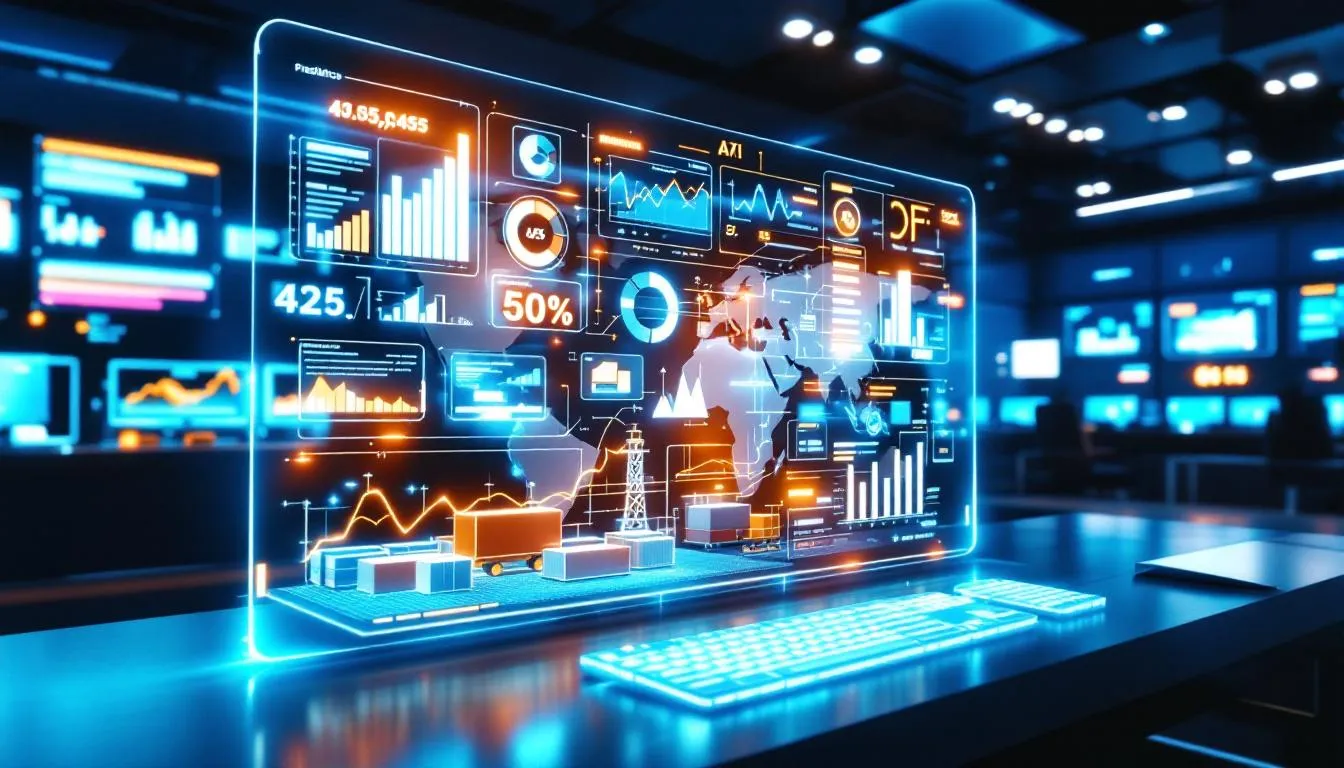
Modern manufacturing faces unprecedented challenges: supply chain disruptions, rising energy costs, skilled labor shortages, and increasing demands for operational efficiency. Industrial IoT consulting emerges as a strategic solution, helping manufacturers transform traditional operations into smart, connected ecosystems that deliver measurable results.
Industrial IoT consulting encompasses professional services designed to guide organizations through the complex journey of implementing connected device networks, data analytics platforms, and intelligent automation systems. These consulting services bridge the gap between traditional industrial operations and cutting-edge iot technology, ensuring successful digital transformation initiatives that drive real business value.
This comprehensive guide explores everything you need to know about industrial iot consulting, from core service offerings to implementation strategies, helping you make informed decisions about your organization’s IoT journey.
What is Industrial IoT Consulting
Industrial IoT consulting represents a specialized field of professional services that help manufacturers and industrial companies implement connected device ecosystems to optimize their operations. These consulting services focus on transforming traditional industrial processes through strategic deployment of iot devices, sensors, and analytics platforms.

The core focus areas of industrial iot consulting include equipment monitoring through real-time data collection, predictive maintenance systems that prevent costly breakdowns, process optimization using advanced analytics, and comprehensive digital transformation initiatives. Consultants work closely with manufacturing teams to identify opportunities for improvement and develop custom iiot solution development strategies tailored to specific business objectives.
Typical implementation timelines span 3-6 months for minimum viable product (MVP) development, followed by ongoing support and optimization phases. This phased approach allows organizations to validate concepts, demonstrate value, and scale successful initiatives across broader operations.
The success metrics achieved through professional industrial iot consulting are compelling. Organizations typically experience 10-25% productivity boosts through improved operational efficiency, 20-50% inventory cost reduction via enhanced asset tracking and inventory management systems, and up to 40% maintenance cost savings by transitioning from reactive to predictive maintenance strategies.
These measurable outcomes demonstrate why businesses increasingly turn to specialized iot consulting firms rather than attempting complex implementations independently. The expertise, proven methodologies, and technology partnerships that consultants provide significantly reduce implementation risks while accelerating time-to-value.
Core Industrial IoT Consulting Services
Professional industrial iot services encompass four primary service areas, each addressing critical aspects of successful IoT implementation. These services work together to ensure comprehensive coverage of technical, strategic, and operational requirements.
Strategy and Assessment
The foundation of successful iiot solutions begins with thorough current infrastructure evaluation and IoT readiness assessment. Consultants analyze existing systems, network capabilities, and operational processes to identify integration points and potential obstacles. This assessment includes evaluating legacy equipment compatibility, network infrastructure capacity, and organizational readiness for change.
Business case development forms a crucial component of strategic consulting, involving detailed ROI projections and timeline planning. Subject matter experts work with client teams to quantify expected benefits, calculate implementation costs, and establish realistic timelines for achieving business objectives. This process ensures stakeholder alignment and secures necessary funding for projects.
Technology stack selection represents another critical strategic decision. Consultants evaluate leading cloud platforms including AWS IoT Core, Microsoft Azure IoT Hub, and Google Cloud IoT, recommending optimal combinations based on specific requirements. The selection process considers factors like scalability, security, integration capabilities, and total cost of ownership.
Risk assessment and compliance review ensure implementations meet industry standards and regulatory requirements. This includes adherence to ISO 27001 information security standards and IEC 62443 industrial security frameworks, protecting organizations from cyber threats while maintaining operational continuity.
Architecture Design and Planning
End-to-end IIoT ecosystem architecture design establishes the technical foundation for successful implementations. Consultants create detailed architectural blueprints that define how iot devices, networks, edge computing resources, and cloud platforms will integrate to deliver required functionality.
The edge computing versus cloud processing decision framework helps organizations optimize data processing strategies. Consultants analyze latency requirements, bandwidth constraints, and processing needs to determine optimal data processing locations. Edge computing solutions enable real-time responses for critical safety systems, while cloud platforms provide powerful analytics capabilities for complex data analysis.
Integration planning with existing enterprise resource planning (ERP), manufacturing execution systems (MES), and supervisory control and data acquisition (SCADA) systems ensures seamless connectivity across organizational technology stack components. This planning phase addresses API development requirements, data mapping needs, and synchronization protocols.
Communication protocol selection involves choosing appropriate standards like MQTT for lightweight messaging, CoAP for constrained devices, OPC-UA for secure industrial communication, and Modbus for legacy equipment integration. The right protocol selection ensures reliable connectivity while minimizing network overhead.
Implementation and Development
Custom iiot solution development using agile methodology ensures iterative progress with regular stakeholder feedback. Development teams follow proven software development practices, delivering functional increments throughout the project lifecycle. This approach allows for course corrections and ensures final solutions meet evolving business needs.
Hardware integration consulting addresses the complex challenge of connecting diverse industrial equipment and iot devices. Consultants provide expertise in sensor selection, gateway configuration, and industrial equipment connectivity. This includes selecting appropriate sensors for temperature, pressure, vibration, and other operational parameters critical for monitoring industrial operations.
Software platform development encompasses creating user interfaces, dashboards, and mobile apps that provide actionable insights from operational data. These platforms transform raw sensor data into meaningful information that operations teams can use for decision-making. The development process includes creating customized analytics engines that support predictive maintenance, quality control, and process optimization.
Testing protocols ensure robust system performance through comprehensive electrical testing, functional testing, and environmental validation. These protocols verify that iiot systems perform reliably under actual operating conditions, including extreme temperatures, vibration, and electromagnetic interference common in industrial environments.
Security and Compliance
Multi-layered security implementation protects iot devices, networks, and cloud platforms from cyber threats. Security consultants implement comprehensive protection strategies that address device authentication, network encryption, and access control. This approach recognizes that connected devices create new attack vectors that traditional IT security measures may not adequately address.
Data encryption standards ensure protection for both in-transit and at-rest data. Consultants implement industry-standard encryption protocols that protect sensitive operational data throughout its lifecycle. This includes encrypting communication between devices and cloud platforms, as well as securing stored data in databases and archives.
Regular security audits and vulnerability assessments identify potential weaknesses before they can be exploited. These ongoing security testing procedures ensure that systems remain secure as new threats emerge and system configurations evolve.
Compliance support addresses industry-specific regulations including FDA requirements for pharmaceutical manufacturing, GDPR data protection standards, and HIPAA healthcare privacy requirements. Consultants ensure that iiot implementations meet all applicable regulatory standards while maintaining operational efficiency.
Industrial Applications and Use Cases
Industrial iot consulting delivers value across diverse industry sectors, each with unique requirements and opportunities for optimization. Understanding these applications helps organizations identify relevant use cases and potential benefits for their specific operations.
Manufacturing and Smart Factories
Smart factories represent the pinnacle of manufacturing digital transformation, leveraging real-time production monitoring and quality control systems to optimize operations. These systems use computer vision, sensor arrays, and advanced analytics to monitor production lines continuously, identifying quality issues before defective products reach customers.
Automated inventory tracking utilizes RFID tags, barcode scanning, and sensor technologies to maintain accurate real-time visibility into materials, work-in-progress, and finished goods. This automation reduces manual counting errors, prevents stockouts, and optimizes inventory management processes that traditionally consume significant labor resources.
Worker safety monitoring systems deploy wearable devices and environmental sensors to protect personnel from workplace hazards. These systems monitor air quality, noise levels, and worker locations, providing immediate alerts when dangerous conditions develop. Integration with emergency response systems enables rapid response to safety incidents.
Digital twin implementation creates virtual models of production lines that enable process simulation and optimization without disrupting actual operations. These digital replicas use real-time data from sensors to mirror physical processes, allowing engineers to test process changes, predict maintenance needs, and optimize production parameters.
Energy and Utilities
Smart grid implementation transforms traditional power distribution through intelligent monitoring and control systems. These systems optimize energy consumption by automatically balancing supply and demand, reducing waste, and improving overall grid reliability. Real-time monitoring enables utilities to identify and resolve issues before they cause widespread outages.
Renewable energy asset monitoring for solar panels and wind turbines maximizes energy generation through predictive maintenance and performance optimization. Sensors monitor equipment conditions, weather patterns, and energy output, enabling operators to optimize performance and schedule maintenance during low-production periods.

Predictive maintenance for power generation equipment prevents costly failures that could affect thousands of customers. Vibration sensors, thermal imaging, and oil analysis systems monitor critical equipment components, providing early warning of potential breakdowns that could cause major service interruptions.
Real-time demand response and load balancing systems automatically adjust energy distribution based on consumption patterns and availability. These systems help utilities manage peak demand periods while integrating variable renewable energy sources into the grid effectively.
Oil, Gas and Mining
Remote rig monitoring and seismic analysis systems enable continuous oversight of drilling operations in challenging locations. These systems monitor equipment performance, geological conditions, and safety parameters, providing operators with real-time visibility into critical operations while minimizing personnel exposure to hazardous conditions.
Pipeline integrity monitoring uses pressure sensors, flow monitors, and leak detection systems to ensure safe hydrocarbon transportation. Early detection of leaks or pressure anomalies prevents environmental damage and ensures regulatory compliance while protecting valuable resources.
Equipment tracking in hazardous environments improves safety and operational efficiency through real-time location monitoring. Workers and critical equipment are tracked continuously, ensuring rapid response during emergencies and optimizing resource deployment across large, complex facilities.
Automated drilling optimization systems use sensor data and machine learning algorithms to optimize drilling parameters in real-time. These systems improve drilling efficiency, reduce equipment wear, and minimize environmental impact while maximizing resource extraction rates.
Agriculture and Food Processing
Precision farming leverages soil moisture sensors, weather monitoring stations, and satellite imagery to optimize crop production. These systems provide farmers with detailed insights into field conditions, enabling precise application of water, fertilizers, and pesticides that maximize yields while minimizing environmental impact.
Livestock tracking and health monitoring systems use wearable sensors and automated feeding systems to optimize animal welfare and productivity. These systems monitor animal behavior, health indicators, and feeding patterns, enabling early detection of illness and optimizing nutrition programs.
Cold chain monitoring ensures food safety and quality throughout the supply chain by continuously tracking temperature, humidity, and location. These systems prevent spoilage, ensure regulatory compliance, and provide complete traceability from farm to consumer.
Automated irrigation and greenhouse climate control systems optimize growing conditions while minimizing resource consumption. Sensors monitor soil conditions, air temperature, and humidity levels, automatically adjusting irrigation schedules and climate systems to maintain optimal growing conditions.
IIoT Consulting Implementation Process
Successful industrial iot consulting follows a structured, phased approach that minimizes risk while maximizing value delivery. This methodology ensures systematic progress through complex implementations while maintaining focus on business objectives.

Phase 1: Discovery and Assessment
The discovery phase begins with comprehensive current state analysis of existing systems and processes. Consultants conduct detailed audits of manufacturing equipment, IT infrastructure, and operational workflows to understand baseline conditions and identify improvement opportunities. This analysis includes evaluating legacy system capabilities, network infrastructure capacity, and integration requirements.
Stakeholder interviews and requirement gathering sessions ensure all perspectives are captured during planning. These sessions involve operations managers, IT teams, maintenance personnel, and executive sponsors to understand diverse needs and expectations. Requirement gathering focuses on identifying specific business objectives, performance metrics, and success criteria.
Technical infrastructure audit and connectivity assessment evaluate network capabilities, security configurations, and integration points. This assessment identifies potential bottlenecks, security vulnerabilities, and infrastructure gaps that could affect implementation success. The audit includes evaluating wireless coverage, bandwidth availability, and cybersecurity readiness.
Budget planning and resource allocation recommendations provide realistic cost estimates and timeline projections. Consultants develop detailed project budgets that include technology costs, implementation services, training requirements, and ongoing support needs. This planning ensures adequate resources are allocated throughout the project lifecycle.
Phase 2: Strategy and Roadmap Development
Business case creation involves developing detailed ROI calculations that quantify expected benefits and justify investment decisions. Consultants work with client teams to model financial impacts, including operational cost savings, productivity improvements, and revenue enhancement opportunities. These calculations provide executive teams with clear justification for IoT investments.
Technology selection and vendor evaluation ensure optimal platform choices for long-term success. Consultants evaluate hardware vendors, software platforms, and system integrators based on technical capabilities, commercial terms, and strategic alignment. This evaluation includes proof-of-concept testing to validate technology choices before major commitments.
Implementation timeline development establishes realistic milestone definitions and delivery schedules. The timeline balances aggressive value delivery with practical implementation constraints, ensuring steady progress while managing change impact on operations. Milestone definitions include specific deliverables, acceptance criteria, and success metrics.
Change management and training plan development address the human aspects of digital transformation. These plans ensure that personnel have the skills and knowledge needed to operate new systems effectively. Training programs cover technical operation, data interpretation, and troubleshooting procedures.
Phase 3: Solution Design and Prototyping
Detailed technical architecture documentation provides comprehensive blueprints for system implementation. These documents specify hardware configurations, software architectures, data flow designs, and integration specifications. The documentation serves as a reference throughout implementation and supports future maintenance activities.
Proof of concept development and testing validates technical approaches through small-scale implementations. These prototypes demonstrate key functionality, verify integration capabilities, and identify potential issues before full-scale deployment. Testing includes performance validation, security verification, and user acceptance evaluation.
Integration planning with legacy systems ensures seamless connectivity between new iot systems and existing enterprise applications. This planning addresses API development requirements, data mapping specifications, and synchronization protocols. Integration design minimizes disruption to existing operations while maximizing data sharing capabilities.
Security framework design and implementation establishes comprehensive protection for connected systems. The framework addresses device authentication, network encryption, access controls, and incident response procedures. Security implementation follows industry best practices and regulatory requirements specific to the client’s industry.
Phase 4: Implementation and Deployment
Pilot project execution begins with selected use cases that demonstrate clear value while minimizing operational risk. Pilot implementations provide opportunities to validate technical designs, refine operational procedures, and train personnel before broader rollouts. Success metrics from pilots inform scaling decisions and optimization strategies.
Iterative development with weekly progress reviews ensures consistent advancement toward project objectives. Regular review cycles allow for course corrections, requirement refinements, and stakeholder feedback incorporation. This agile approach maintains momentum while adapting to evolving needs and discoveries.
User training and documentation creation prepare operations teams for system operation and maintenance. Training programs cover system operation, data interpretation, troubleshooting procedures, and maintenance tasks. Comprehensive documentation supports ongoing operations and knowledge transfer to new personnel.
Performance monitoring and optimization setup establishes ongoing system health monitoring and improvement processes. These systems track key performance indicators, identify optimization opportunities, and provide early warning of potential issues. Monitoring dashboards provide operations teams with real-time visibility into system performance and business metrics.
Key Technologies and Platforms
The technology landscape for industrial IoT solutions encompasses diverse platforms, protocols, and tools that form the foundation of successful implementations. Understanding these technologies helps organizations make informed decisions about their technology stack investments.
At Matix, we leverage cutting-edge cloud platforms and services to provide scalable, secure, and flexible infrastructure tailored to your business needs. Our expertise ensures seamless integration of edge computing capabilities for real-time data processing and advanced analytics.
Cloud Platforms and Services
We utilize top-tier cloud platforms to enable robust device connectivity, data processing, and digital twin capabilities.
Communication Protocols and Standards
Matix implements industry-standard communication protocols to guarantee reliable, secure, and efficient connectivity across diverse IIoT devices and industrial equipment. We also integrate advanced wireless technologies to ensure optimal coverage and performance tailored to your operational environment.
Analytics and AI Technologies
Our industrial IoT solutions incorporate machine learning algorithms, computer vision, and real-time analytics platforms to enable predictive maintenance, asset performance monitoring, and process optimization. By harnessing big data analysis and AI, Matix helps you anticipate potential breakdowns, schedule maintenance proactively, and enhance overall operational efficiency.
By choosing Matix as your industrial IoT consulting partner, you gain access to a comprehensive technology stack and expert guidance that drive successful IoT adoption and digital transformation initiatives.
Benefits of Professional IIoT Consulting
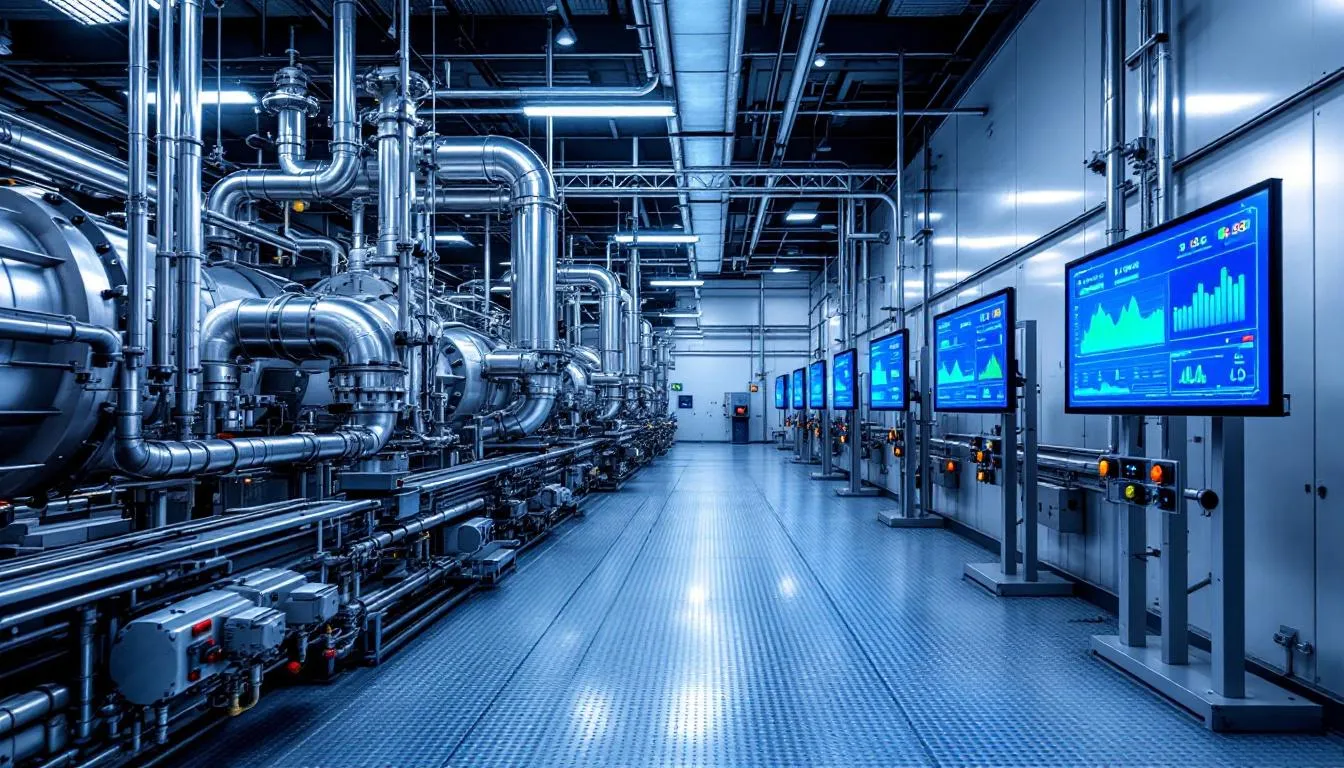
Professional industrial iot consulting delivers measurable value across multiple dimensions, transforming operational performance while generating significant return on investment. These benefits extend beyond simple automation to create sustainable competitive advantages.
Operational Excellence
Unplanned downtime reduction represents one of the most significant benefits, with organizations achieving up to 40% improvement through predictive maintenance systems. These systems monitor equipment conditions continuously, identifying potential failures days or weeks before they occur. This early warning capability enables scheduled maintenance during planned downtime, preventing costly emergency repairs and production interruptions.
Overall equipment effectiveness (OEE) improvements of 25% result from optimized production processes and reduced equipment failures. IoT-enabled monitoring provides granular visibility into production efficiency, quality rates, and equipment availability. This data enables targeted improvements that maximize productive capacity from existing assets.
Production throughput increases of 15% come from process optimization enabled by real-time monitoring and advanced analytics. Continuous monitoring identifies bottlenecks, inefficiencies, and optimization opportunities that manual monitoring might miss. Automated adjustments and operator alerts ensure optimal performance throughout production cycles.
Problem resolution speeds improve by 30% through real-time monitoring and automated alerting systems. When issues occur, operations teams receive immediate notifications with relevant context and recommended actions. This rapid response capability minimizes the impact of problems and reduces troubleshooting time.
Cost Optimization
Inventory carrying cost reductions of 20-50% result from automated tracking systems that provide accurate, real-time visibility into materials and finished goods. These systems eliminate manual counting errors, reduce safety stock requirements, and optimize replenishment timing. Enhanced visibility enables just-in-time delivery strategies that minimize working capital requirements.
Energy consumption decreases of 35% come from smart monitoring systems that identify inefficiencies and optimize power usage. Real-time monitoring reveals opportunities for load balancing, equipment scheduling, and process optimization that reduce overall energy consumption. Automated systems can adjust operations based on energy costs and availability.
Maintenance cost reductions of 45% result from transitioning to condition-based maintenance strategies enabled by continuous monitoring. Rather than following fixed schedules, maintenance activities are performed based on actual equipment condition and predicted failure timelines. This approach reduces unnecessary maintenance while preventing costly emergency repairs.
Supply chain efficiency improvements of 25% come from enhanced visibility and coordination across the entire value chain. Real-time tracking of materials, products, and transportation assets enables better planning, reduced delays, and improved customer service. Integration with supplier systems creates seamless information flow that optimizes the entire supply chain.
Competitive Advantage
Time-to-market acceleration of 3-6 months for new products results from digitally-enabled development and production processes. Real-time data from production systems enables rapid prototyping, faster quality validation, and accelerated ramp-up of new product lines. This speed advantage allows companies to respond quickly to market opportunities and customer demands.
Enhanced product quality through continuous monitoring and control creates stronger customer satisfaction and brand reputation. Automated quality systems detect defects earlier in the production process, reducing scrap rates and ensuring consistent product quality. Real-time feedback enables immediate process adjustments that maintain quality standards.
Improved customer satisfaction results from better service delivery enabled by predictive maintenance and quality monitoring. Customers benefit from more reliable products, faster delivery times, and responsive service support. Data-driven insights enable proactive customer communication and service optimization.
Future-ready infrastructure for Industry 4.0 initiatives positions organizations for continued digital transformation and competitive advantage. IoT implementations create the data foundation and technical capabilities needed for advanced applications like artificial intelligence, autonomous operations, and mass customization.
Choosing the Right IIoT Consulting Partner
Selecting the appropriate industrial iot consulting partner significantly impacts implementation success and long-term value realization. The right partner brings technical expertise, industry knowledge, and proven methodologies that accelerate results while minimizing risks.
Discover how Matix can empower your business with tailored IIoT solutions designed to drive innovation and operational excellence.

You might also like
.png)

.png)

MAXIMIZE OEE
Your Tools, Our Technology
Take control of your industrial tools' performance. Our demo will show you how to leverage real-time data, predictive analytics, and comprehensive asset management to minimize downtime and maximize productivity.


“New eyes on your molds production to lead performance towards operational excellence.”

Emanuele Quarin, Digital industrial operations director